13.2 million clicks in twelve months with Google Discover and Search
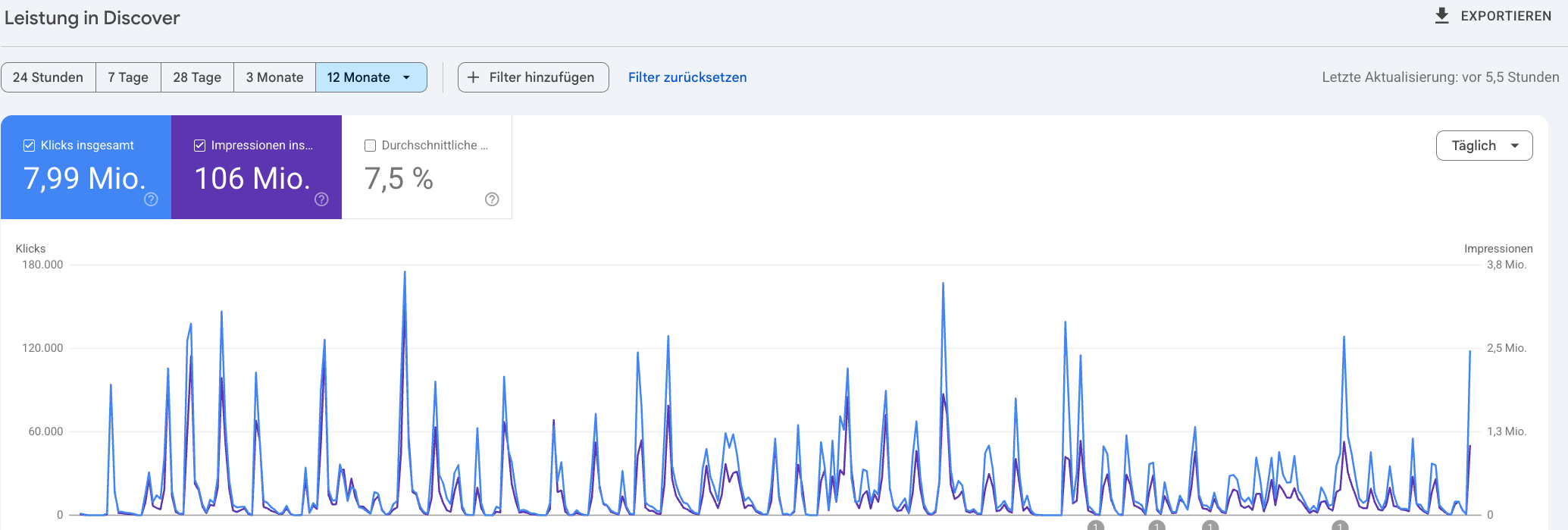
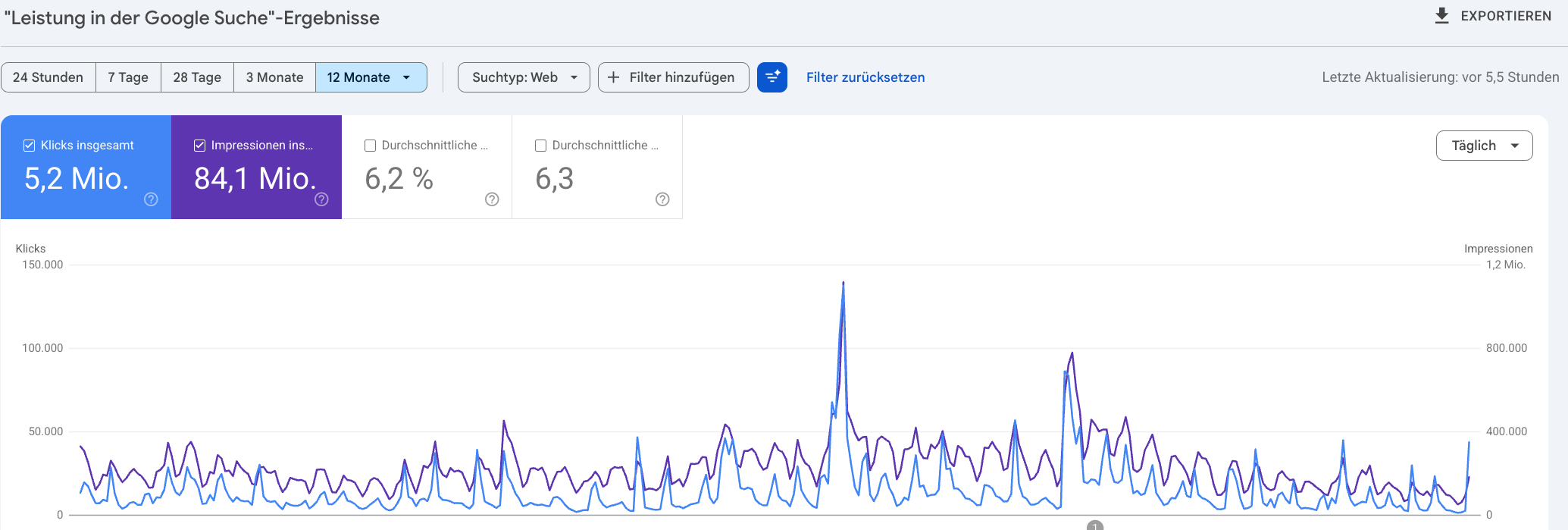
A publisher earned 7.99 million clicks from Google Discover and 5.2 million clicks from Google Search in twelve months.
Starting point
What was this publisher's starting point?
The publisher gets its traffic from Google Discover and Google Search.
We designed a topic production that focuses on current topics. That way our articles worked in Google Discover and Google Search at the same time.
Measures
Which measures did we implement?
Topics along the most important authorities
I analysed on which topics Google already attributes authority to the publisher; there Google shows articles reliably. The newsroom has focused on these core topics ever since.
Author profiles made visible
We expanded every author profile, photo, career, areas of expertise and all of the person's articles in one place.
Readers and search systems see immediately who writes and why this person masters the topic.
Every author sticks to their core topics
The authors write consistently on their areas of expertise instead of across all sections.
That way the author's profile and the topical authority of the domain grow together.
Plannable events and repeatable formats
Predictable events are in the editorial plan before they happen. Recurring formats such as "What changes in month XY" appear fresh every month.
Readers know the pattern, and the newsroom knows in advance what it will write.
Results
What results did we achieve?
Around 13.2 million clicks and 190 million impressions in twelve months, both channels combined.
The data comes from Google Search Console and shows the past twelve months. The publisher remains anonymised.
Google Discover: 7.99 million clicks
Discover delivered 106 million impressions at a click-through rate of 7.5 percent.
Google Search: 5.2 million clicks
Google Search brought 84.1 million impressions at a 6.2 percent click-through rate. The clicks came mainly via Top Stories.
Learnings
What are the learnings from this project?
Discover is plannable
The Discover peaks are spread across the whole year. Recurring formats and pre-planned events have fixed dates in the editorial plan, so part of the traffic is foreseeable before publication.
Top Stories and Discover reinforce each other
Articles we wrote for Top Stories also performed in Discover with little extra effort. Both surfaces respond to similar signals, freshness, headline, image.
Enormous traffic is possible despite AI search
13.2 million clicks in twelve months show that Google still delivers large reach to publishers, despite AI answers in search.
FAQ
Frequently asked questions about this case study +
Are the numbers in the case study verified?
Yes. The figures shown come from the client's Google Search Console; I share them only with his consent.
Is Google Discover the same as Google Search?
No. Google Discover is a feed that shows content based on users' interests without a search query; Google Search answers specific queries.
How are Google Discover and Top Stories connected?
Top Stories appear for a specific search query, Discover without one. Both are connected through production, because the same story can serve both surfaces if it is online early.
The craft still differs. In Top Stories the headline matters in relation to the query, in Discover the image; Google recommends a width of at least 1,200 pixels.
Does this approach also work for smaller newsrooms?
Yes, the measures do not require a large budget. Defining core topics, maintaining author profiles and establishing recurring formats is above all a question of discipline in the editorial plan.
Sources
Sources used
- Own research
- Google Search Console: "client data, anonymised"
Transparency
Note on the data
I have permission to share this data in anonymised form.
Which of these measures fit your newsroom?
Thirty minutes. Together we look at your topics, your authors and your Discover data.
Book an initial call